


Wastewater treatment, collection, and discharge are essential for protecting human health, the environment, and water quality. Before treatment, wastewater must be collected from sewer networks servicing homes, municipal, commercial, and industrial premises, including rainwater run-off from roads and impermeable surfaces. 污水的采集、排放与处理,对于保障人类健康、保护环境与水质量至关重要。在进行处理前,须先从民用住宅、市政工程、商用及工业用地的排水管网采集污水,包括路面与各种不透水表面的雨水径流。
Wastewater and industrial wastewater treatment are evolving. Initially focused on cleaning before safe discharge, today, wastewater is recognized as a valuable resource for energy, nutrients, and water. 污水构成和工业废水处理技术都在随着社会发展而不断进步。起初人们聚焦在污水的安全排放与净化处理上,如今人们已经意识到:污水可以转化为能源、肥料以及清洁用水,变废为宝。
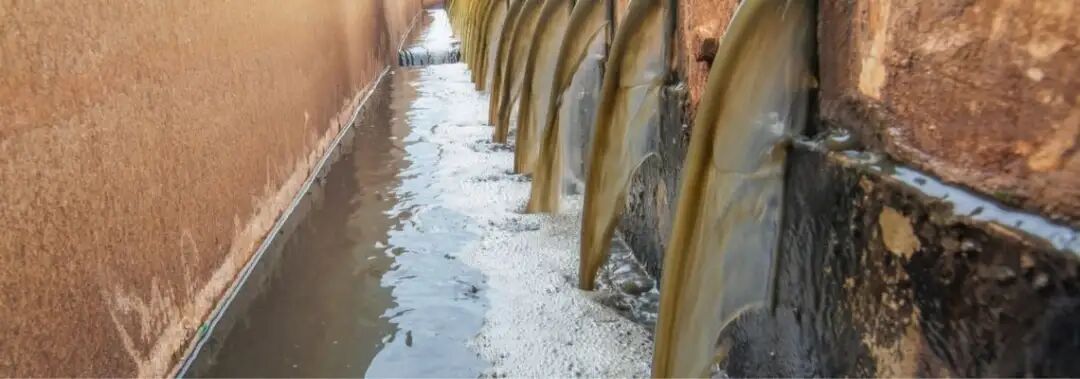
Image credit 图源: www.aquatechtrade.com
Wastewater: Creating sustainable value
废水资源化:实现可持续价值
Global access to safe water, sanitation, and hygiene education is vital for reducing disease, improving health, and fostering socio-economic development. The 2030 Agenda for Sustainable Development, specifically Goal 6, aims to ensure sustainable water and sanitation management for all by 2030. 在全球范围内实现安全用水、环境卫生并开展个人卫生教育,对于减少疾病、改善人类健康以及促进社会经济发展都是必不可少的。联合国《2030年可持续发展议程》中第6项可持续发展目标,旨在到2030年确保为所有人提供可持续的水和环境卫生管理。
Beyond preserving human health and environmental well-being, modern wastewater treatment plays a crucial role in identifying ways to extract value from materials, energy, and water embedded in wastewater streams. 除了保障人类健康和环境福祉,现代污水处理技术在探索如何从废水中蕴含的物质、能源和水中提取价值方面,同样发挥着至关重要的作用。
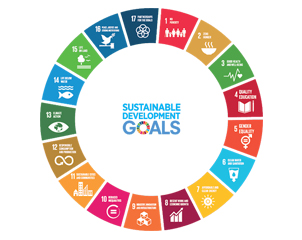
Image credit 图源: ILO
In the UK, the largest systems link to approx. 9000 wastewater treatment plants. Recent fibre sensing cable developments assess flow, depth, temperature, and structural integrity every five meters along sewer pipes. 在英国,最大的污水排放网络链接了近9000座污水处理厂,人们采用现代光纤传感技术,可以沿着排污管道每隔5米采集一次管内流量、深度、温度以及结构成分数据。
The four stages of wastewater management 污水管理的四个阶段
Wastewater treatment involves extensive sewer networks spanning thousands of kilometres, varying in size across regions and countries. Once wastewater reaches treatment plants, four stages include 污水处理涉及到绵延数千公里的庞大的排污管网,具体因国家和地区而异。污水进入处理厂后,将经过以下四个处理阶段:
-
Preliminary treatment (pre-treatment) 初级处理(预处理):去除污水中的砂砾、碎石,过滤掉大颗粒固体物。
-
Primary treatment 一级处理:对较大的悬浮有机物进行沉降处理。
-
Secondary treatment 二级处理:通过生物降解分解并减少有机物残留。
-
Tertiary treatment 三级处理:采用多种处理工艺处理各类污染物。
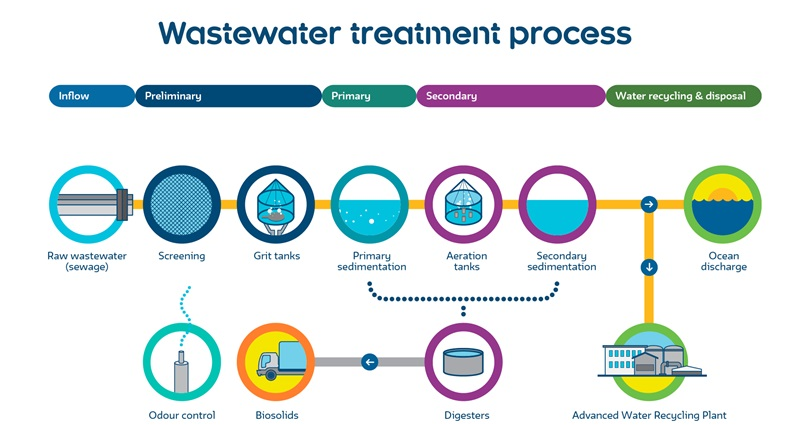
Image credit 图源: Water Corporation
In wastewater treatment, a mixture of solids and water, known as sludge, is produced. The IWA notes that the volume of sludge generated in a WWTP is only about one per cent (0.5 per cent when dewatered) of the influent wastewater volume. Efficient WWTP management requires the extraction of waste sludge, including inert solids and excess biomass, to prevent system accumulation. 污水处理过程中产生的固体和水组成的固态、半固态物质,被称为污泥。国际水协会(IWA)指出,污水处理厂产生的污泥仅占进水总量的约1%(脱水后为0.5%)。高效的污水处理厂需要及时清除废弃污泥,包括各种惰性固体和过多生物量,以防止系统堆积。
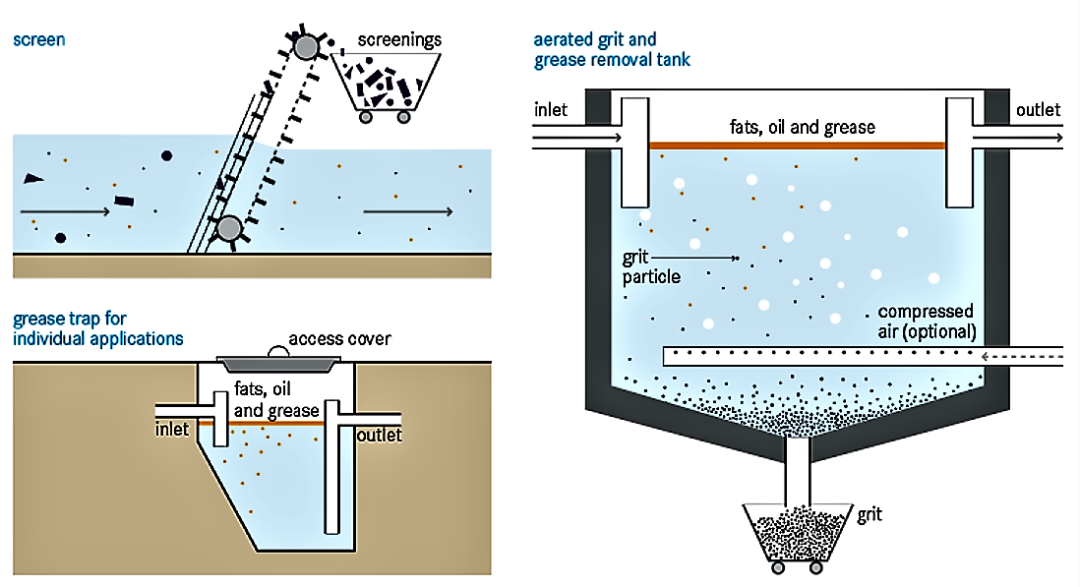
Image credit 图源: Sustainable Sanitation and Water Management Toolbox
4 Advanced wastewater solutions
抢先看!四大先进污水处理方案
Wastewater treatment is a multifaceted process crucial for maintaining environmental health and safety. The treatment involves a sequence of stages, each with distinct objectives and methods to ensure the effective removal of pollutants. 污水处理工艺繁杂,但对维护环境健康与安全至关重要。它包含多个工艺阶段,各阶段有各自的工艺特点和处理方法,以确保有效去除各种污染物。
Various advanced treatment solutions have emerged in response to the demand for enhanced operational cost efficiency (OPEX), reduced plant footprints, and stricter discharge regulations 为提升运营成本效益(OPEX)、减少处理厂碳足迹及应对更严格的排放法规要求,各种高级处理方案不断涌现:
1
Moving Bed Biofilm Reaction Technology(MBBR)移动床生物膜反应技术
MBBR technology utilizes numerous polyethylene biofilm carriers, which move in a mixed motion within an aerated wastewater treatment basin. MBBR技术,通过投加一定数量的聚乙烯生物膜载体,使其与水流在污水处理曝气池内混合移动。
Each biocarrier enhances productivity by offering a protected surface area for the growth of heterotrophic and autotrophic bacteria within its cells. This high-density population of bacteria facilitates high-rate biodegradation within the system. 污水流经这种填料时,微生物在填料表面生成一层防护膜,使其细胞内异养菌和自养菌大量增殖生长,从而提高了净化处理效果。这种高密度菌群非常有利于提高系统内的生物降解率。
MBBR processes can self-maintain an optimum level of productive biofilm which, when attached to the mobile biocarriers within the system automatically responds to load fluctuations, according to Headworks International. 据Headworks International公司表示,MBBR工艺可以自行维持反应器内的生物量,其独特的生物膜载体结构,可以自动应对系统内的负荷波动。
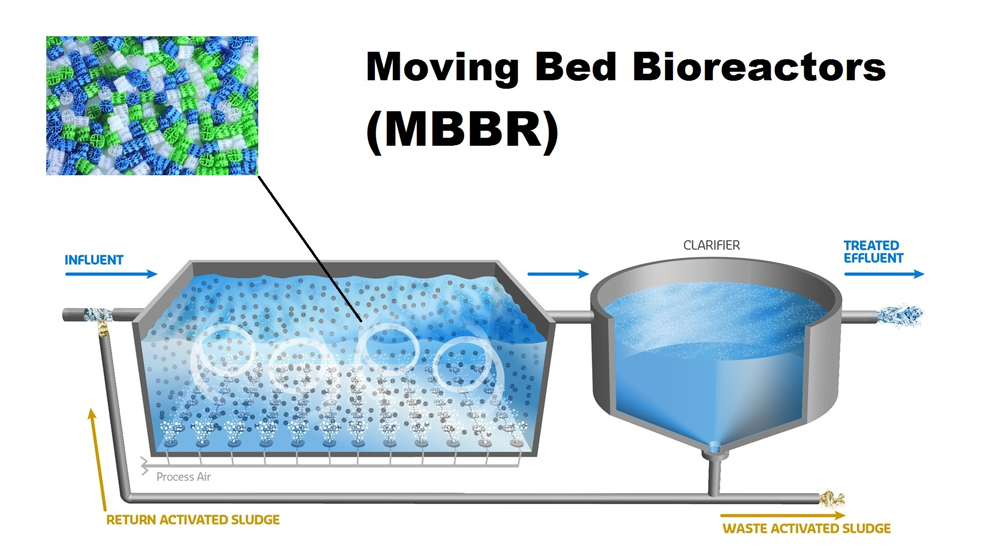
Image credit 图源: Gustawater
2
Membrane Bioreactors(MBR)
膜生物反应器技术
“Membrane Bioreactor” (MBR) combines a perm-selective membrane (e.g., microfiltration or ultrafiltration) with a suspended growth bioreactor in wastewater treatment. In contrast to “polishing” processes, MBRs integrate the membrane into the biological treatment directly. 膜生物反应器(MBR)是一种将选择性渗透膜(如微滤膜或超滤膜)与悬浮式生长的生物反应器相结合的污水处理技术。与“精处理”工艺不同,MBR技术直接将膜组件结合到生物处理单元中。
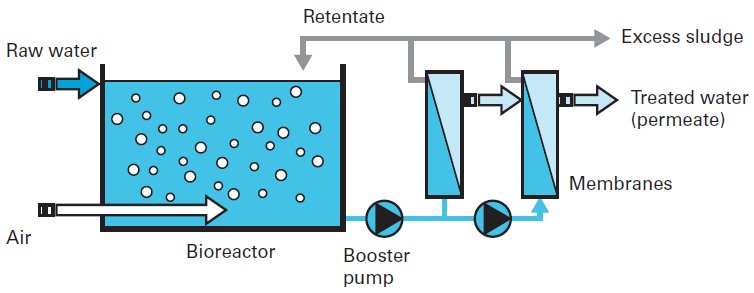
Image credit 图源: SUEZ water handbook
3
Membrane aerated biofilm reactor(MABR)
膜曝气生物膜反应器技术
MABR systems passively circulate oxygen through a spirally wound membrane at atmospheric pressure. MABR’s self-respiring membrane allows bacteria to consume oxygen more readily for a 90% reduction in energy used for aeration. MABR技术的核心组件是一种自呼吸螺旋缠绕膜,这种膜可以通过常压空气实现氧气的被动传输,使细菌更轻松地消耗氧气,从而将曝气能耗降低90%。
Most commercial MBR processes use the membrane as a filter, resulting in clarified and disinfected effluent. This integrated approach ensures effective contaminant removal for a streamlined wastewater treatment solution. 大多数商用 MBR 工艺的膜是用来过滤的,而MABR工艺的膜是用来输送氧气的,从而使出水水质更加干净卫生。这种综合处理方法能有效地去除污染物,实现更高效的污水处理方案。
The membrane surface accumulates a biofilm of bacteria that establishes a simultaneous nitrification-denitrification (SND) process to produce a high-quality, low-nitrogen effluent suitable for reuse in irrigation. 膜表面积聚了大量菌群形成生物膜,同步实现硝化-反硝化(SND)反应,从而产生高质低氮的出水,可用于农田灌溉。
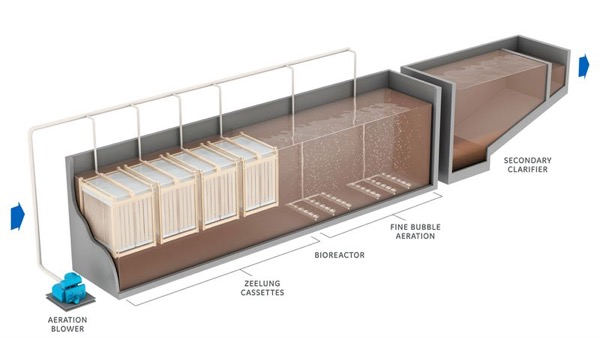
Image credit 图源: Blower & Vacuum Best Practices
4
Ultraviolet (UV) 紫外线消毒技术
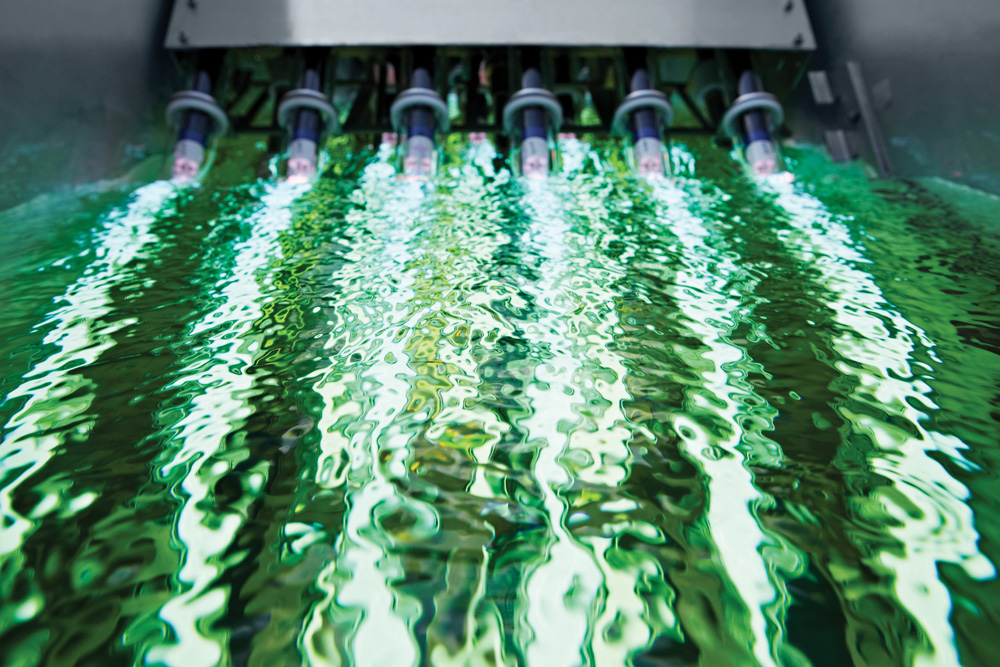
Image credit 图源: Environmental Science & Engineering Magazine
For advanced wastewater treatment plants, ultraviolet (UV) technology has been included in the tertiary treatment process. This can allow the wastewater treatment plant to meet even more stringent requirement, in some cases for indirect and direct potable reuse and water reclamation. 一些先进的污水处理厂已经将紫外线(UV)消毒技术纳入三级处理流程。紫外线消毒处理使污水处理厂能够达到更严格的卫生要求,有些甚至可用于水再生和水回用,包括直接或间接饮用水回用。
The wavelengths of UV light range between 200 and 300 nanometers (billionths of a meter). Special low-pressure mercury vapor lamps produce ultraviolet radiation at 254 nm, the optimal wavelength for disinfection and ozone destruction. Categorised as germicidal, this means they are capable of inactivating microorganisms, such as bacteria, viruses and protozoa. The UV lamp never contacts the water; it is either housed in a quartz glass sleeve inside the water chamber or mounted external to the water which flows through UV transparent Teflon tubes. 用于消杀的紫外线波长通常在200至300纳米(十亿分之一米)之间。低压汞蒸气灯可产生波长254纳米的紫外线辐射,这是卫生消毒和臭氧灭活的最佳波长。因此,这种低压汞灯常用于杀菌消毒,它能够杀灭污水中的细菌、病毒以及原生生物等各种微生物。而且这种紫外线灯无需接触水体,其安装方式有两种:一种是置于水箱内的石英玻璃套管中,一种是安装在外部,对流经透明特氟龙管的水体进行照射消毒。
(未完待续...)关注我们,下篇更精彩!
Aquatech China 2026 亚洲水技术展览会
荷兰阿姆斯特丹国际水处理展览会·中国展
2026年10月28-30日
中国·上海 新国际博览中心
招展火热进行中,预定从速!
联系我们
展位咨询
华先生
手机: 13621883675
邮箱: a.hua@aquatechexpo.com
市场合作
潘先生
手机: 18737945006
邮箱: matthew.pan@aquatechexpo.com
Aquatech Global 品牌系列水展

关于Aquatech China 2026
荷兰阿姆斯特丹国际水处理展览会·中国展暨Aquatech China 2026亚洲水技术展览会将于2026年10月28-30日在上海新国际博览中心盛大举办。
作为专注于水、服务于水的水处理行业风向标展览会,Aquatech China展品覆盖水处理全产业链,包含净水、水与污水处理、水环境治理、给排水管网及泵管阀、过程控制与自动化管理、智慧水务等领域。展会背靠荷兰母展近60年水处理展会经验与资源,辐射亚太地区水处理行业,是全球水处理人技术交流、商贸往来的优选专业平台。
Aquatech China由荷兰RAI锐昂展览集团大中华区子公司——锐昂展览(上海)有限公司主办。更多请访问官网: www.aquatechexpo.com


扫描公众号二维码
关注我们
专注水行业 覆盖全领域